
Argentina made of silver
When we landed in Argentina’s capital Buenos Aires the thermometer was showing 33 degrees Celsius in the shade. We had left Sofia in freezing rain, which they expected to turn into pre-Christmas snowfall. According to the calendar Christmas was also approaching Argentina, although for us, the strangers from the Northern Hemisphere, the lush greenery and the relentless heat had nothing to do with snow-covered Christmas trees, sleighs and other attributes characteristic for the festive season. Nonetheless, the streets of this megapolis with 13 million inhabitants weren’t short of festive decoration. Splendid electrical images of bells, snowflakes, deer and boots were ridiculously hanging from date palms and rubber trees. What a contrast! However, it was just the beginning of an uncontrollable torrent of contrasts characteristic of the Silver Country—as the European pioneers named it after the Latin word for silver, argentum.
We were in a hurry to leave the Christmas heat behind us and after a four-hour-flight we landed at the southernmost end of the continent, the Tierra del Fuego Island, where the climate was more favourable to our bodies tuned to a winter regimen. After the enormous avenues of Buenos Aires roaring with heavy traffic —on avenida “9th July” alone we counted 18 lanes—the tranquility and simplicity of Ushuaia seemed to come from another planet.
Although Argentina’s tour operators fall over themselves advertising the town as the southernmost settlement in the world, the Chileans too have their undeniable claims. However, one thing’s for sure–to declare Tierra del Fuego (the Land of Fire) as Fin del Mundo (End of the World) seems completely justified. If you look at the globe you’ll see that this piece of land is really “hidden” at the bottom of the Earth. It is the last permanently inhabited territory before the ice-covered infinity of Antarctica.
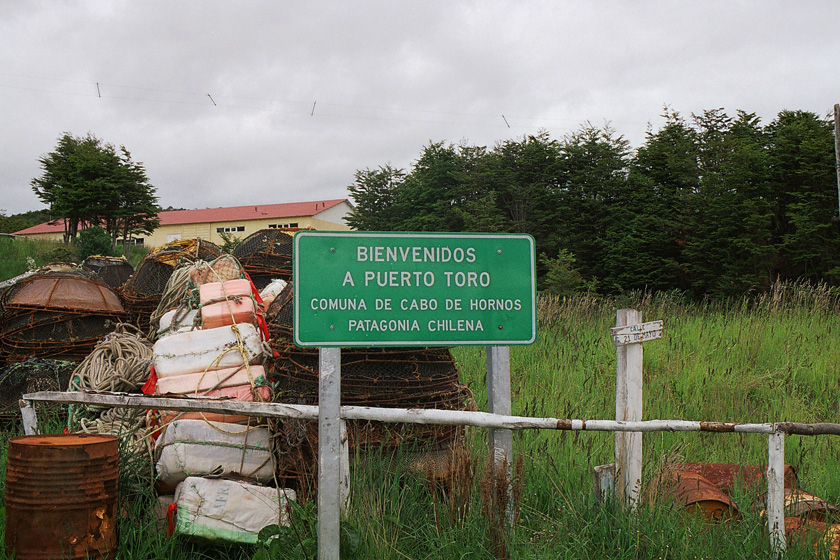
It is here where our one-month journey northwards along the whole length of Argentina begins —4000 kilometers altogether through the most varied and contrasting climate possible, from the polar cold of the Andes in Tierra del Fuego to the humid heat of the Tropic of Capricorn. Although huge in territory –2,8 million square kilometers—Argentina, with its population of 38 million, is one of the sparsely inhabited countries in the world. Why this is so we were very soon to find out. What we needed was simply to set foot in the clouds of dust of the southern steppe, called Patagonia. Being a symbol of remoteness and adventurous longing, this mythical land occupies an area (including the Chilean part) as big as almost the whole of Western Europe. However, it has a population of only about one and a half million.
After several days of mountaineering in the Andes, with the polar storm winds blowing in our faces, we enter the real Patagonia: yellow infinity of sharp grass, thistle and grasping, all-penetrating, driving-you-mad, 24-hour west wind. Indeed, if you want to get an idea what nature’s element “wind” means, Patagonia is the best place to go. I’ve been to many windy places in the world, from the Atacama Desert to the Tibetan Plateau, but I’ve never experienced such winds that simply devastate the human psyche. Only one fact: the wind in Chalten, a village at the foot of the phenomenal alpine peaks Cerro Torre & Co, has an average annual velocity of 25 km/h, which means that it blows incessantly at 7 metres per second or more.
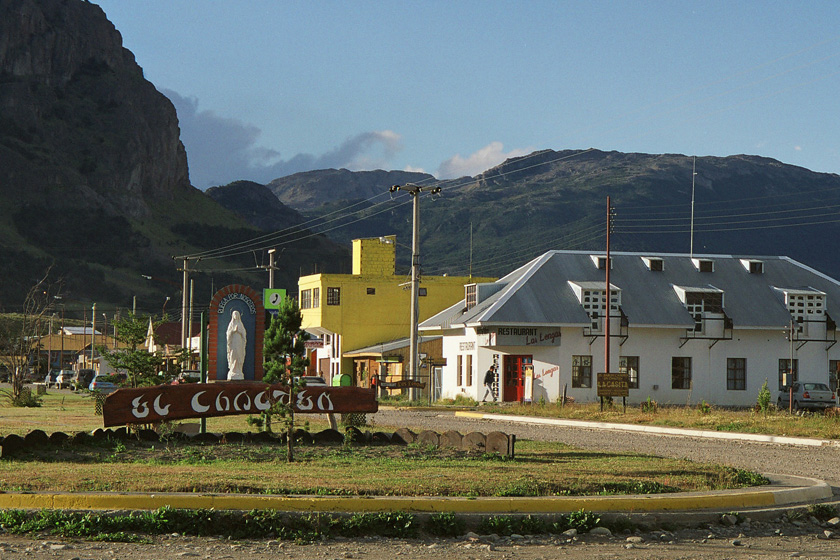
However, when we arrived in El Chalten—a dusty village with sheet iron roofs where the windows are sealed and never opened for obvious reasons—we were surprisingly met by an almost tender breeze, which tempted us into the Patagonian Andes. These mighty mountains are incredibly beautiful and at the same time – disgusting because of the constantly nasty weather. On January 5th (corresponding to July 5th for us) we were caught by a snow storm although the altitude wasn’t higher than the Dragalevtsi quarter of Sofia. So much for the “gentle breeze”. And when some five days later we continued our journey to the north traveling on the dirt roads of Patagonia, the bus was rocking like a sailboat in a stormy sea.
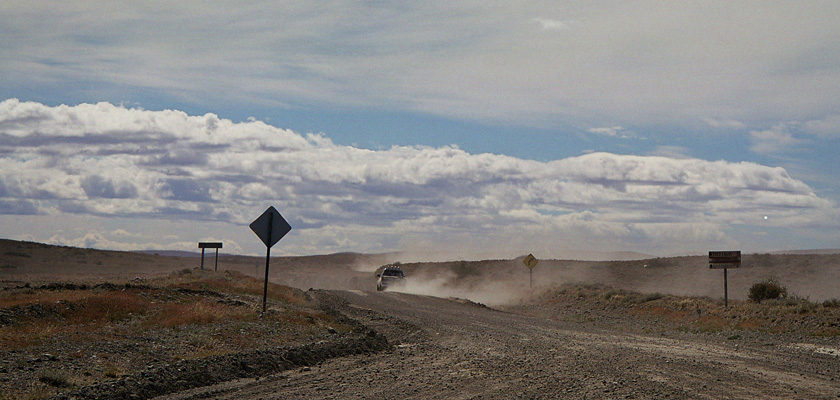
As the only asphalt-paved road here follows the Atlantic coast, we had first to cross the least accessible part of Patagonia, including the notorious 800-kilometer-long “Ruta Cuarenta” (National Route 40)—an obligatory part of the Patagonia Rally and of the Raid Gauloises adventure race. A dusty desert road, accompanied by inconsolable loneliness, bottomless sky, breathtaking sun-sets, one or two petrol stations and some ramshackle pubs full of gauchos, who tied up their horses out front. Shy ñandús (South American ostrich variety) dash hastily across, herds of guanaco (wild llama archetype) anxiously look around and only millions of sheep (the winning novelty of modern Patagonia) graze imperturbably.
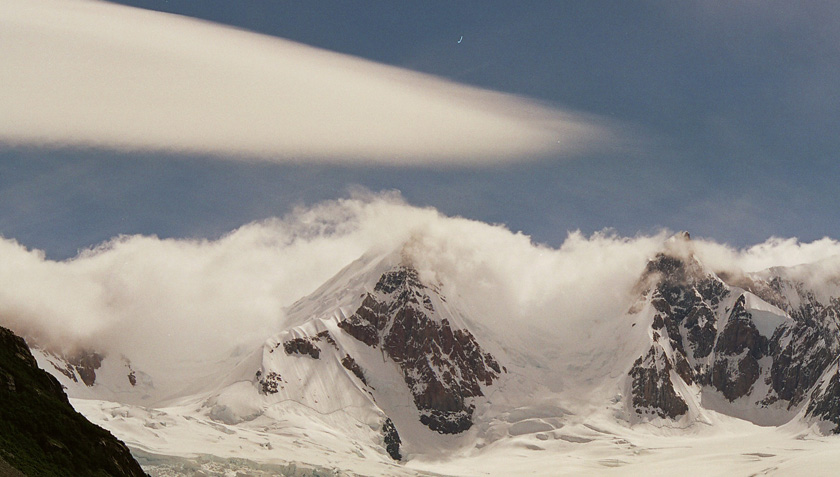
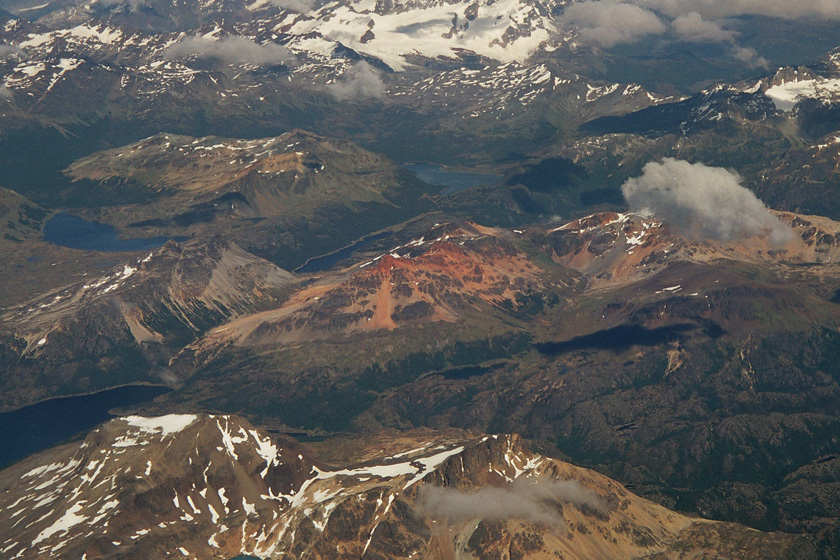
We left the mountainous part of Patagonia and could not but be sorry. Although it has some incurable problems with the climate, Argentina’s National Park “Los Glaciares” (The Glaciers) boasts probably the most fabulous views in the world: mighty swelling-up glaciers ending as fire-works of newly-born icebergs in up to 200-kilometer-long lakes. Above them the rocky relief of sculpturally molded mountain peaks is a true gallery of nature’s creativity. And all this against the background of the unique vegetation of southern flowers and bizarre forests, blown by the wind.
“Lago Argentino” is one of these powerful places, where we happened to see in the New Year of 2005. Ths spider-resembling lake has an east-west orientation. The many fiords bite into the slopes of the Patagonian Andes and get stopped only by the huge glaciers. However, most of the lake stretches in the yellow steppe, cutting up the Patagonian monotony with its emerald waters. We had pitched a camp at one of the southernmost arms of the lake. Characteristically, the 31st December turned out to be a rainy day. However, around 9 in the evening the sky cleared, and as it was light until 11 pm during the southern summer, we managed to crawl out of our tent and drink a bottle of Argentinean wine to celebrate the New Year. Our hopes to see the Southern Cross, equivalent to the constellation of Little Bear in the sky of our hemisphere, were in vain, as with the fall of the night clouds started covering the sky.
As exciting as the journey along Ruta Cuarenta was—indeed, it is a legendary route like the hippie Route 66 in the USA and the route from Europe to India—we heaved a sigh of relief when we reached the asphalt covered part of Patagonia and the city of “Comodoro Rivadavia” on the Atlantic Ocean. From the heaven of the sheep-breeders we moved to the kingdom of the drillers—as monotonous and windy as the first one. Thank God, at least the transport was better organized here, and in the buses—Brazilian made—one could even sleep. We had ahead of us 1800 kilometers to Buenos Aires and from there “only” 1200 more to our northernmost destination: the Iguazu Falls in the border triangle between Argentina, Paraguay and Brazil.
On leaving Comodoro I noticed a proud sign: Asociacion de Bulgaros Kiril y Metodii! And two hours later we were moved to tears when a ranger in the local reserve Bosque Petrificado (the Petrified Forest) almost kissed us when he learned we were Bulgarian. “Bulgaros? Atanassov, Dimitrov, Penkov… Hay mucho carpinteros bulgaros en Sarmiento.” Obviously many compatriots had settled down in the nearby town of Sarmiento in the remote past working as carpenters.
After a three-day-tour along the Atlantic coast, which was rich in penguins, guanaco, ostriches and much more, we got on the bus to Buenos Aires. Good bye, Patagonia! If it weren’t for the wind, we would have come to love you forever!
1800 kilometers later we get off the bus straight into the sweaty heat of the capital and dive into the city life. Wine, beefsteak, tango and… street demonstrations! If someone thinks that the idea of social justice—as preached by Marx through Trotsky to Che Guevara—is dead should visit Argentina. Whatever they say in the States and Europe, the Argentineans believe that equality among people will save the world and not the global economy. And they put on a show of it in every possible way. But what else can you expect from a people for which Che Guevara is a national icon leaving even the idol Maradona in second place…
In the taxi from Retiro to the city we have the opportunity to feel even more Bulgarian. When the taxi driver learns where we come from he immediately ejaculates: “Stoikov! Amigo de Maradona!” I shrug my shoulders—it’s possible that Stoichkov is indeed his friend. As for the situation of Bulgarian football at the moment I explain to him in broken Spanish that we are “mas o menos” (so-so). The driver objects loudly: “Bulgaria es fuerza en futbol.´ Well, why not?
After football comes the tango. The passion of the Argentineans for these two things is proverbial. They say an Argentinean would change his wife many times but never his football club. Although we missed the chance to go to a football match, a tango show in Lyceum Theater provided the possibility of getting in touch with the Argentinean soul. I don’t know about Boca Juniors and River Plate, but to watch tango in Buenos Aires live is a phenomenal and unique experience.
Not less unforgettable are the sounds and sights of the “cataratas’, the waterfalls of Iguazu. They are a phenomenon of nature in its prime genuineness. You literally gasp for breath and have the feeling that you witness Noah’s flood and the end of the world. What horror and veneration must Alvar Nuñez Cabeza de Vaca and his companions have felt at the sight of this awe-inspiring water avalanche in the year 1541. After we had a peep into the stunning bubbling cauldron of Garganta del Diablo (Devil’s Throat)—the most terrific waterfall in the whole system—it was already time to leave for home.
We had crossed the silver Argentina lengthwise–a country that had turned out to be barren in terms of silver, as barren as most South American fantasies of the Spanish conquistadors about El Dorado. Instead of finding precious metals, we too, like them, had come across a unique kaleidoscope of peaks, glaciers, lakes, rivers, forests and wonders that rarely can be seen gathered in one place.
Two days later we took off for Sofia in short sleeves. However, our luggage didn’t arrive at Sofia airport and we shivered with cold in the January snowstorm before we could get to our winter clothes at home.